The History of Wiener Neustadt

Between the past and the present

Where the past comes to life: Discover the fascinating history of Wiener Neustadt and see how the town has developed from its origins through significant historical periods right up to the present day.

From the town’s foundation by the Babenbergs, through the Second World War, to what makes Wiener Neustadt what it is today.

Wappenwand Theresianische Militärakademie
©Busy Shutters
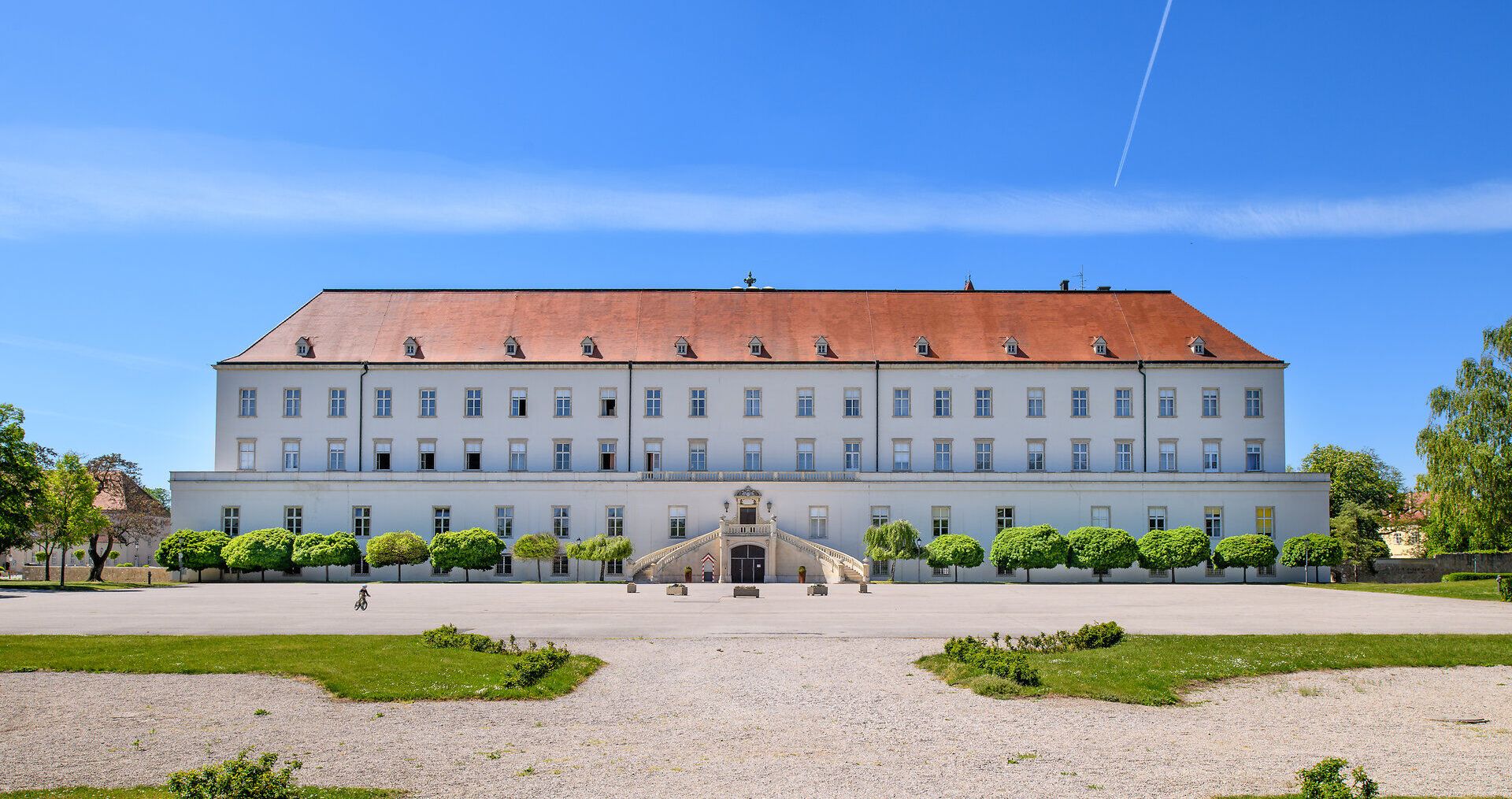
Die Militärakademie in Wiener Neustadt mit angeschlossenen Akademiepark.
©© Wiener Alpen/Christoph Schubert

Foundation by the Babenbergs

Towards the end of the 12th century, Leopold V, Duke of Babenberg, decided to found a heavily fortified town in the middle of the plain of the south-eastern Steinfeld. Part of the ransom paid for the English King Richard the Lionheart, who was being held captive in Dürnstein, was used to fund the construction of the ‘Neuenstat’. A total of 23 tonnes of silver was paid, which equalled the entire silver reserves of the British Kingdom.  

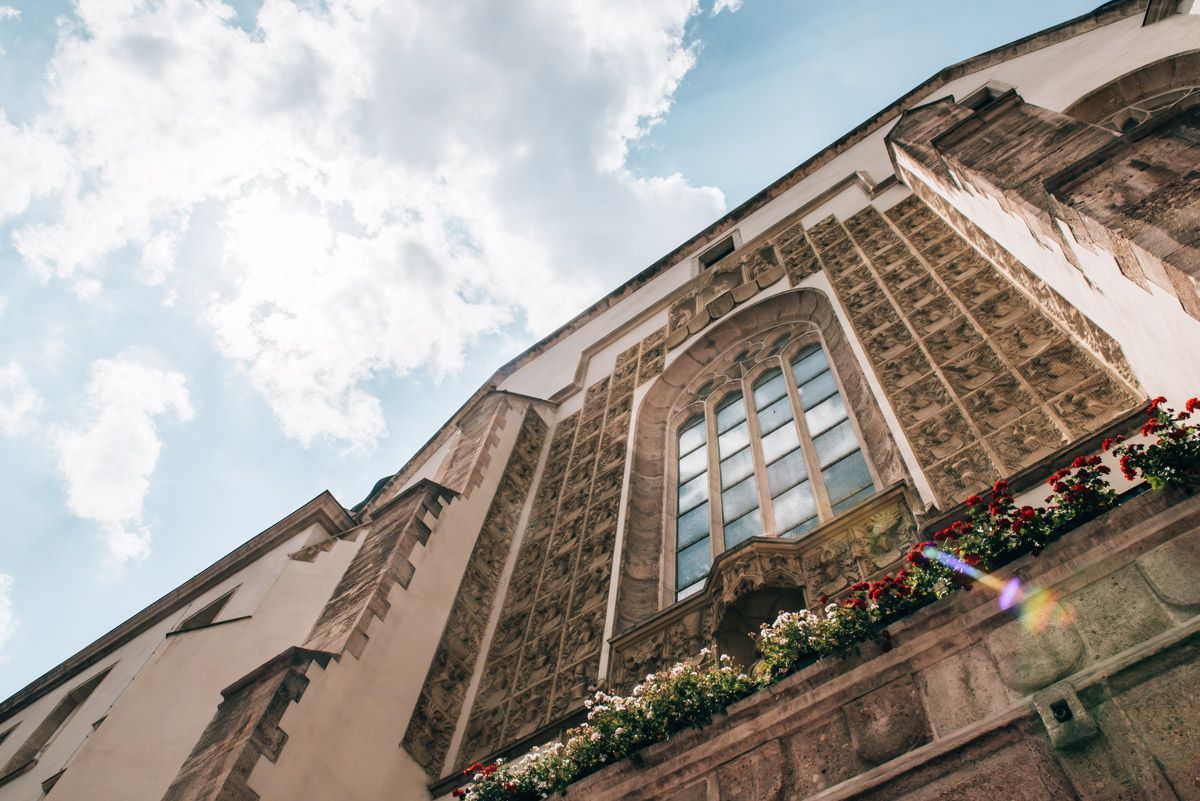
Thanks to the granting of important privileges, the new town flourished remarkably. As early as around the year 1200, work began on the construction of the late Romanesque parish church ‘Zu unserer Lieben Frau’ (Our Lady), now Wiener Neustadt Cathedral. Also during the Babenberg era, the four-towered castle complex in the south-eastern corner of the town was built, which later became the Military Academy.

Habsburgs & Sieges

The town of Wiener Neustadt enjoyed its heyday in the 15th century, when it served as the residence of Emperor Frederick III for many decades. It was here, in Neustadt Castle, that Frederick’s famous son, the future Emperor Maximilian I, was born in 1459. He found his final resting place in the castle’s magnificent St George’s Cathedral (1519). In 1469, a diocese was established in Wiener Neustadt.

After a siege of almost two years by the Hungarians, the superbly fortified and admirably defended town of Wiener Neustadt was finally forced to open its gates to the Hungarian King Matthias Corvinus and his troops in August 1487. A large, silver, gilded and richly decorated ceremonial cup, the ‘Corvinus Cup’ – according to legend a gift from the Hungarian king to the people of Wiener Neustadt – still serves as a reminder of this period today. The Corvinus Cup is housed in the Museum St. Peter an der Sperr.

It was not until the summer of 1490, after three years of Hungarian occupation, that the young King Maximilian I succeeded in recapturing his hometown.

In the 16th century, the town of Wiener Neustadt, which was no longer a royal residence, lost much of its importance. However, the town continued to fulfil its original function as a bulwark against the East admirably in modern times, holding its ground valiantly against the Turks and the Kurucs.

Maria Theresa founds the Military Academy

Of paramount importance to the town was the decision taken by Maria Theresa in 1751 to establish a cadet school for the nobility in the imperial castle at Wiener Neustadt: this famous ‘Theresian Military Academy’, where teaching began in 1752, has continued to exist (apart from brief interruptions) to this day. This makes it the oldest military academy in the world. The Military Academy is the sole training institution for officers of the Austrian Armed Forces. For several years now, the Military Academy has also been recognised as a university of applied sciences degree programme in ‘Military Leadership’, which has further enhanced the status of the training.

Airfield & World War

In 1909, the municipal authorities had an airfield built in the north of the city to promote mechanical aviation; the first Austrian Air Week was held there as early as 1911. The Wiener Neustadt airfield, where aviation pioneers such as Igo Etrich, Karl Illner and Adolf Warchalowski conducted their flight experiments, was the first official Austrian airfield and is today the oldest natural airfield in Europe.

Following Austria’s ‘Anschluss’ to the German Reich in March 1938, Wiener Neustadt became a hub for war-critical industries. By 1940, the ‘Wiener Neustadt Aircraft Works’ were already supplying a quarter of the total production of (Messerschmitt) 109 fighter aircraft. At the facilities of the established former Wiener Neustadt locomotive factory “Rax-Werke”, not only were locomotive tenders built, but the assembly of A-4 rockets also began here in 1943. All this led to Wiener Neustadt being almost completely destroyed by bombs during the Second World War: around 50,000 bombs reduced the old Babenberg town to rubble and ashes.

In the final days of the Second World War, Wiener Neustadt Castle was completely gutted by fire. On 14 December 1958, the anniversary of the founding of the Military Academy, the rebuilt building was handed over to the Austrian Armed Forces in a state ceremony as an officer training centre.

Before reconstruction could begin, thousands of tonnes of rubble had to be cleared from the town: in 1946, the town council called on the population to volunteer for the work. This call to clear the rubble was heeded without exception. By 1955, when Austria regained its freedom through the State Treaty and the occupying forces had left the country, the reconstruction of Austria’s most heavily damaged city was largely complete. Nothing now stood in the way of Wiener Neustadt’s flourishing development into the undisputed centre of south-eastern Lower Austria.

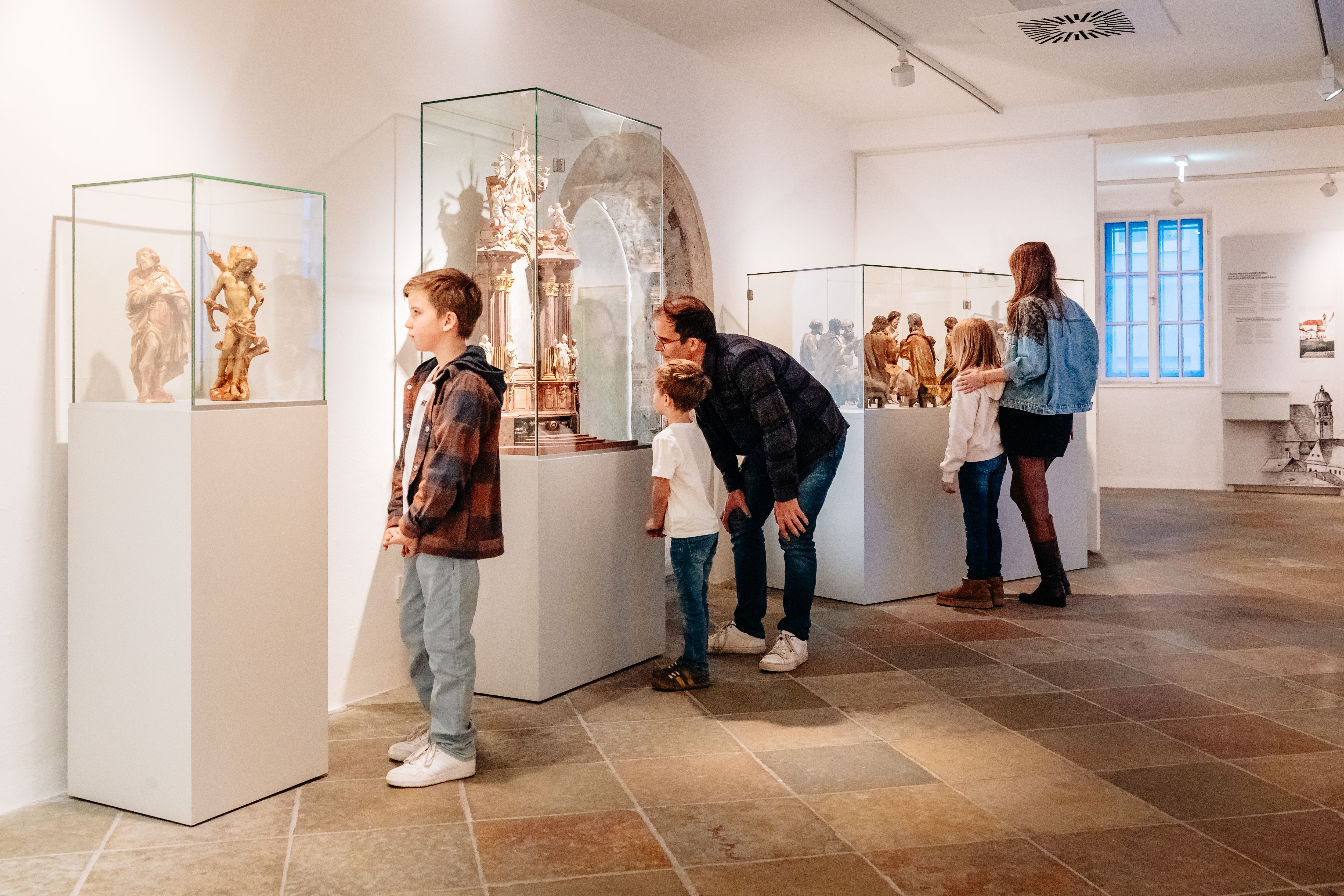
Familien im Museum.
©Busy Shutters

History up close

Discover the history of Wiener Neustadt at the Museum St. Peter an der Sperr, Austria’s oldest municipal museum.

About the museum