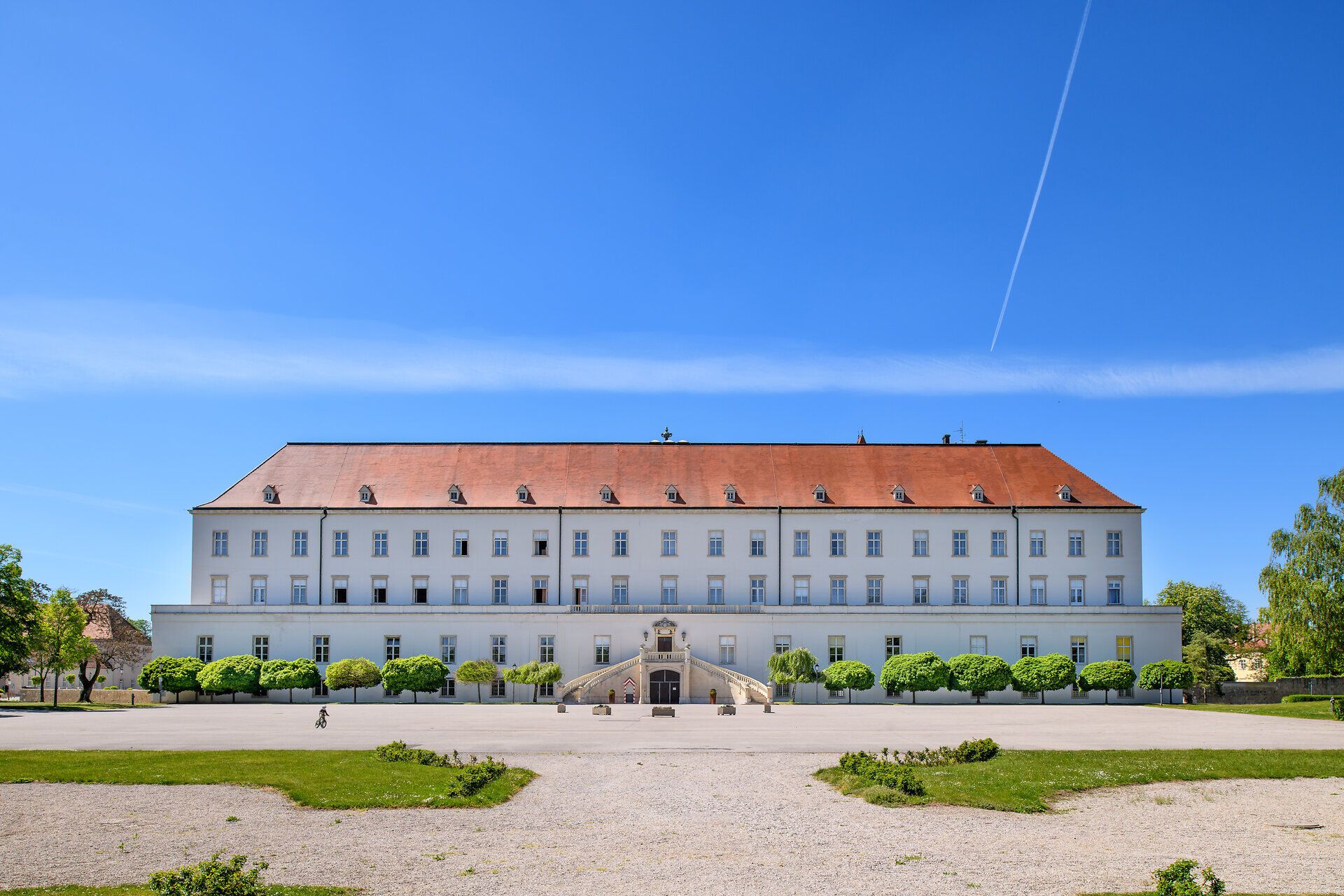
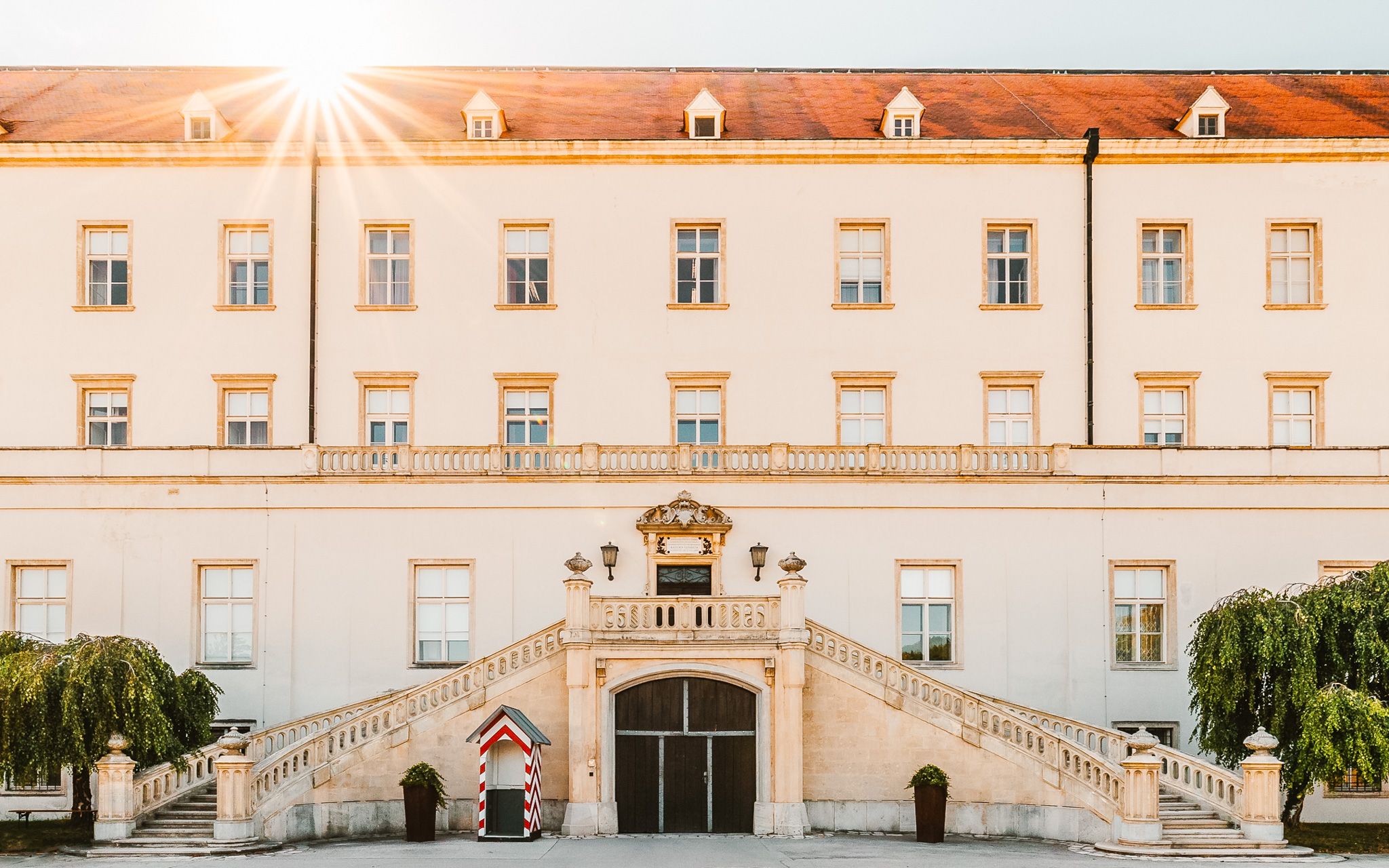
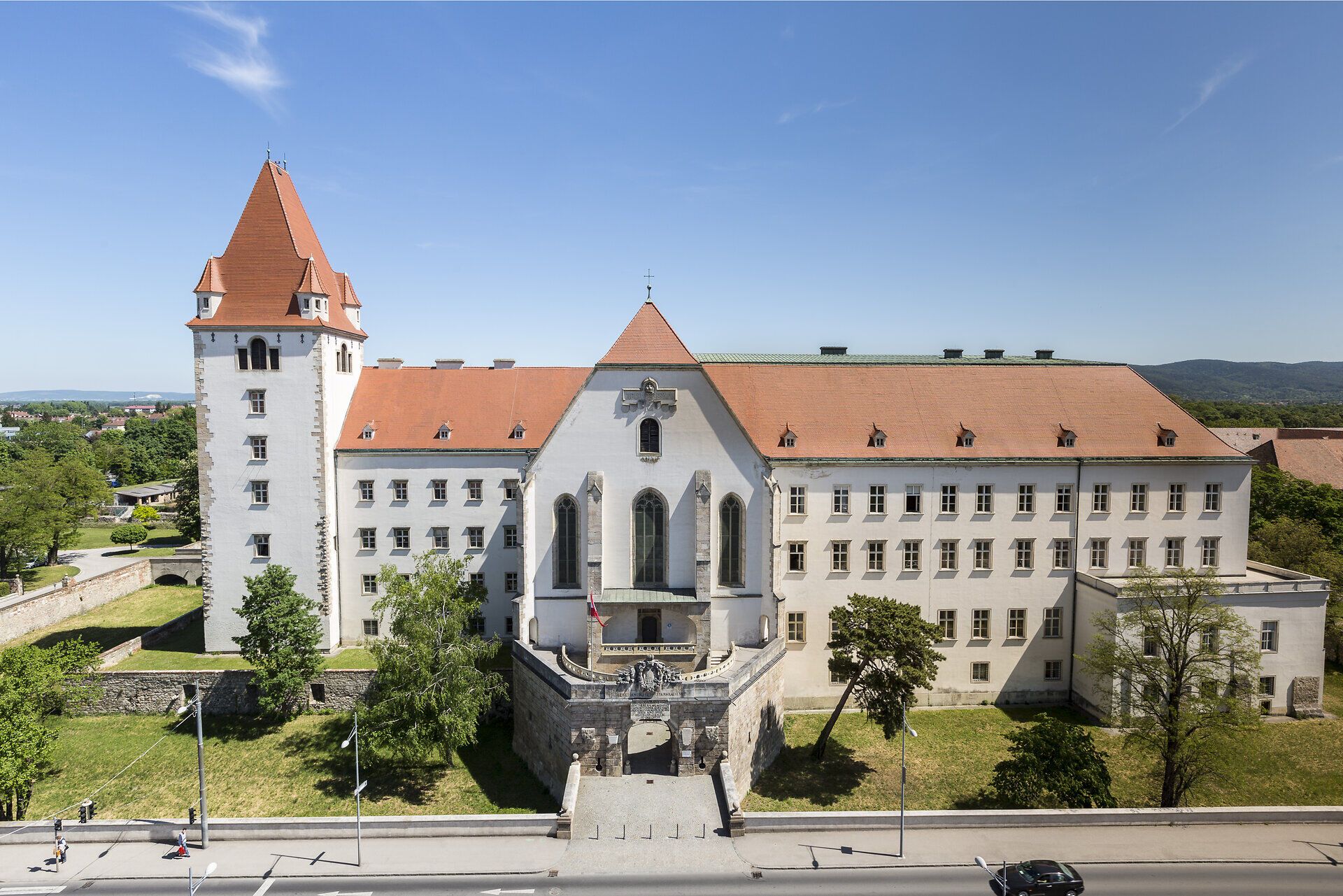
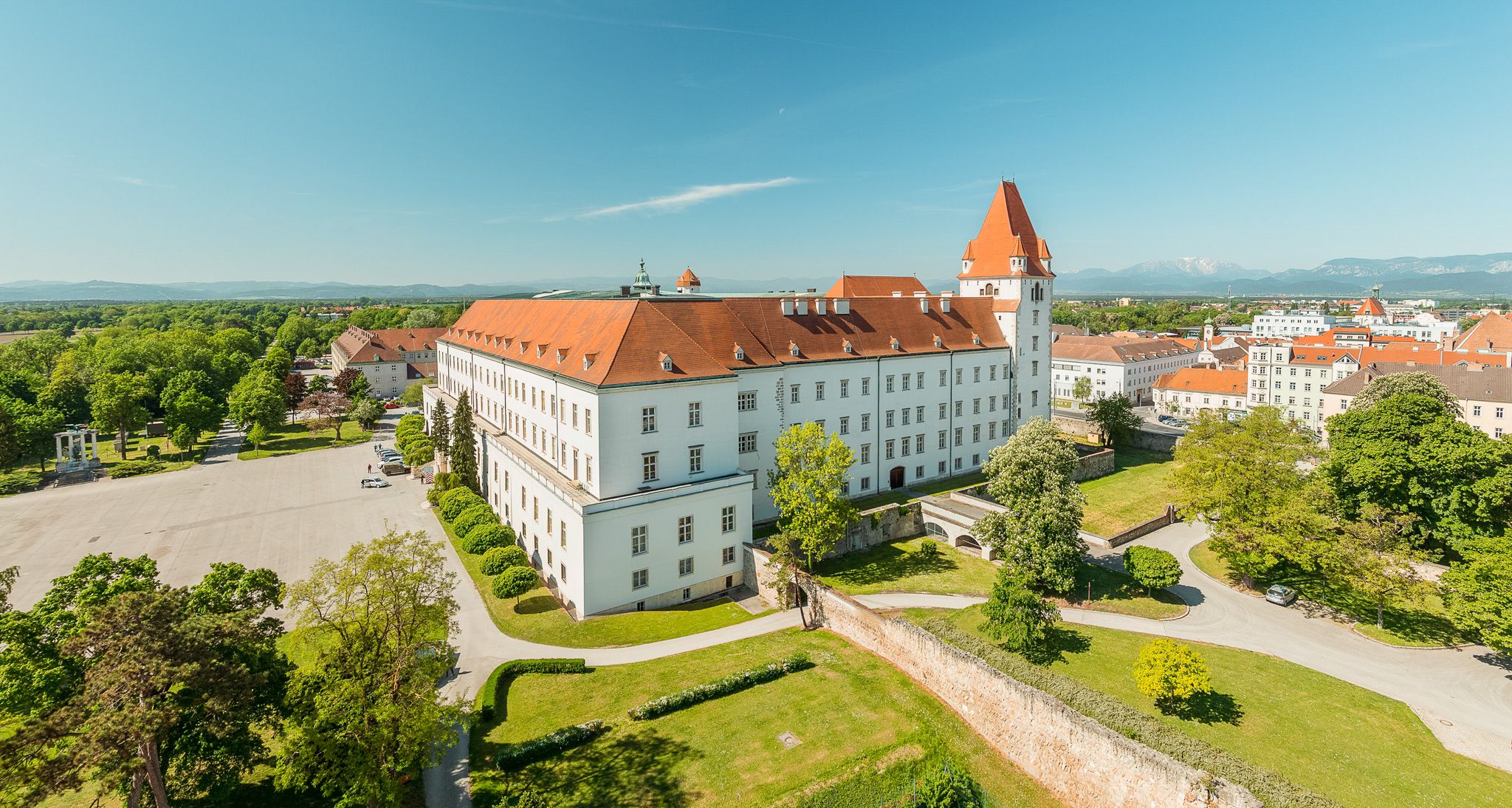
From castle to the world's oldest military academy
The castle was built around 50 years after the town was founded in 1192 as a military base for the last Babenberg, Frederick II the Warlike. Over the centuries, it was continuously expanded and used for new purposes. Emperor Frederick III had the castle fundamentally rebuilt, giving it most of its present appearance. Vienna Neustadt was an important residence for Emperor Frederick III and his son Maximilian I. Emperor Maximilian I was born and baptised in the castle in Vienna Neustadt. He spent his youth in the city and returned here repeatedly throughout his life. In accordance with his will, he was buried in St. George's Cathedral. His remains lie beneath the steps of the high altar. According to legend, only his heart is located 1,200 km away in Bruges, in the sarcophagus of his first wife, Mary of Burgundy.
From imperial residence to officer training centre
In 1751, Empress Maria Theresa turned the castle into what is now the oldest military academy in the world. "Make them into capable officers and righteous men" was the order she gave to her first commander. Originally intended as a training centre for 100 aristocrats and 100 commoners, the military academy became the training ground for the Habsburg Empire's elite. Even today, a new class of well-trained men and women graduates every year. Anyone who wants to know what the abbreviation AEIOU, coined by Emperor Frederick III, stands for will find a possible explanation during a guided tour in front of the famous coat of arms wall. And with a smile, they will discover that its interpretation still fires the imagination today.
Emperor Maximilian I was born and baptised in the castle at Wiener Neustadt. He spent his youth in the city and returned here repeatedly throughout his life. In accordance with his will, he was buried in St. George's Cathedral. His remains lie beneath the steps of the high altar. According to legend, only his heart is located 1,200 km away in Bruges, in the sarcophagus of his first wife, Mary of Burgundy.
Where the past comes alive: discover the fascinating history of Wiener Neustadt and experience how the city has developed from its origins through significant historical eras to the present day.
From the city's founding by the Babenbergs to the Second World War and what makes Wiener Neustadt what it is today.