Library, refectory, treasure and curiosity chamber, tomb of Eleonore
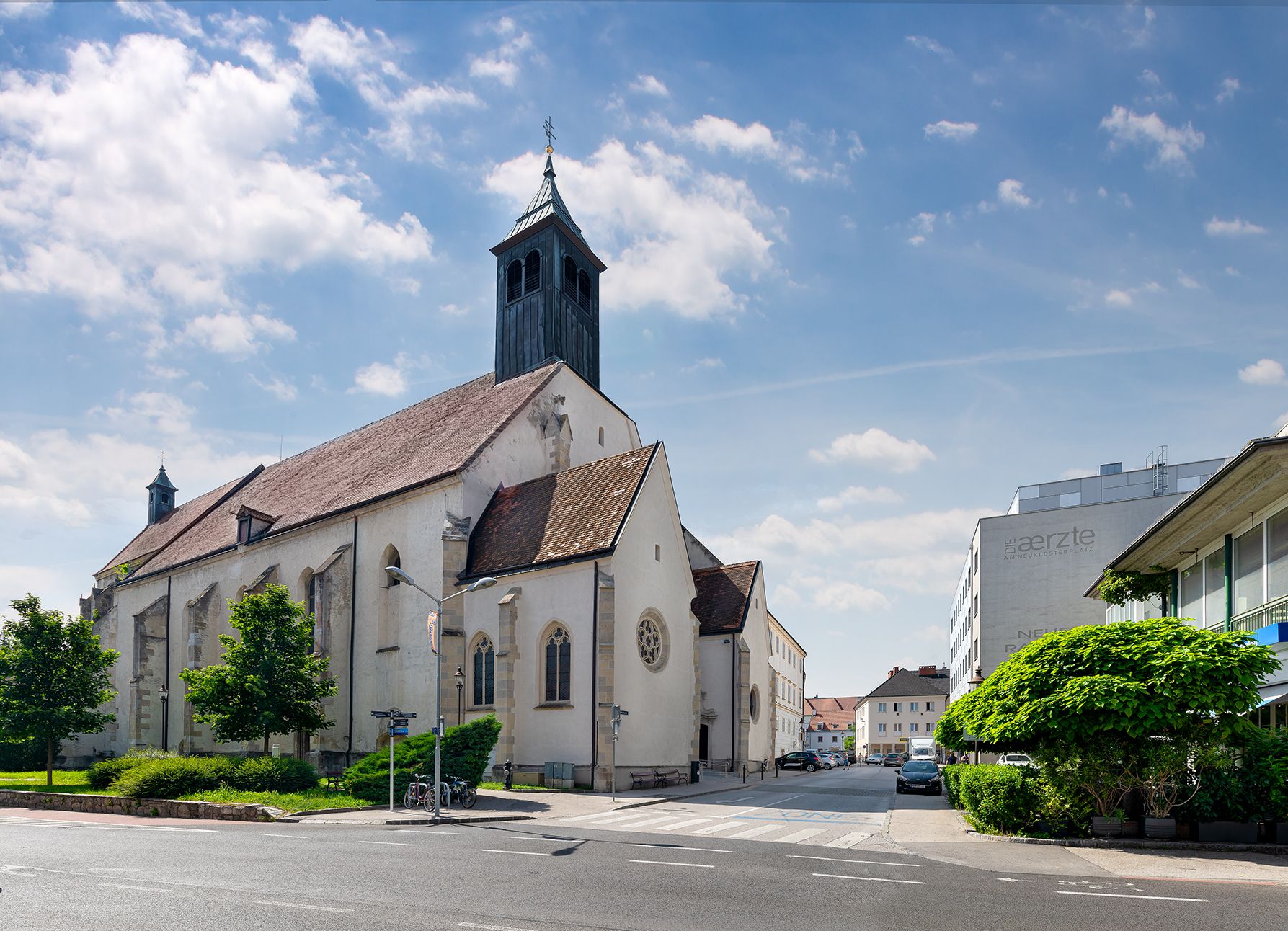
The Neukloster monastery in Wiener Neustadt was founded by Emperor Frederick III in 1444. Since 1882, it has belonged to Heiligenkreuz Abbey and is a priory with seven monks and also a thriving parish. The theatre, where a wide variety of performances are regularly staged, also belongs to the Neukloster monastery. The theatre is lovingly run by the Scherz family.
The monastery's remarkable art and curiosity chamber displays art and sacred objects that reflect the world in miniature. In the 18th century, not only princely courts began to build collections of art objects, but also monasteries, including those responsible for the Neukloster monastery.
In addition to magnificent art chamber objects, the collection also includes unique memorabilia from historical events. It comprises approximately 4,700 individual items, including 1,000 art chamber objects, 200 paintings and 3,500 stones and shells. Most of the collection was acquired during the monastery's heyday between 1740 and 1801.
The Kunst- und Wunderkammer is not only an important document of Baroque collecting in the 18th century, but also of the monastery's history. Some objects in the collection have been published in the database catalogue of the Lower Austrian Museum Management as part of the "Schätze ins Schaufenster" (Treasures in the Shop Window) project.
The refectory and the magnificent Baroque library form a unique art-historical ensemble. Both rooms were thoroughly restored before the 2019 provincial exhibition and made accessible to visitors. As neither the refectory nor the library had been open to the public until then, the Baroque frescoes by Johann Baptist Wenzel Bergl had remained almost completely intact.
The tomb of Empress Eleonore of Portugal, mother of Maximilian I, can also be viewed at Neukloster Abbey. The tomb is attributed to the workshop of Gerhaert van Leyden and captivates with its liveliness.