Railway Hiking Trail: Semmering-Breitenstein
Hiking tour Starting from Semmering train station
Note: The railway hiking trail is currently rerouted between the Semmering and Wolfsbergkogel train stations via Südbahnstraße and Adlitzgrabenstraße. This scenic alternate route runs above the historic Südbahn railway line and past the impressive villas of the Semmering summer resort.
Note: The railway hiking trail is currently rerouted between the Semmering and Wolfsbergkogel train stations via Südbahnstraße and Adlitzgrabenstraße. This scenic alternate route runs above the historic Südbahn railway line and past the impressive villas of the Semmering summer resort.
Note: The railway hiking trail is currently rerouted between the Semmering and Wolfsbergkogel train stations via Südbahnstraße and Adlitzgrabenstraße. This scenic alternative route runs above the historic Südbahn railway line and past the impressive villas of the Semmering summer resort.
Railway Hiking Trail
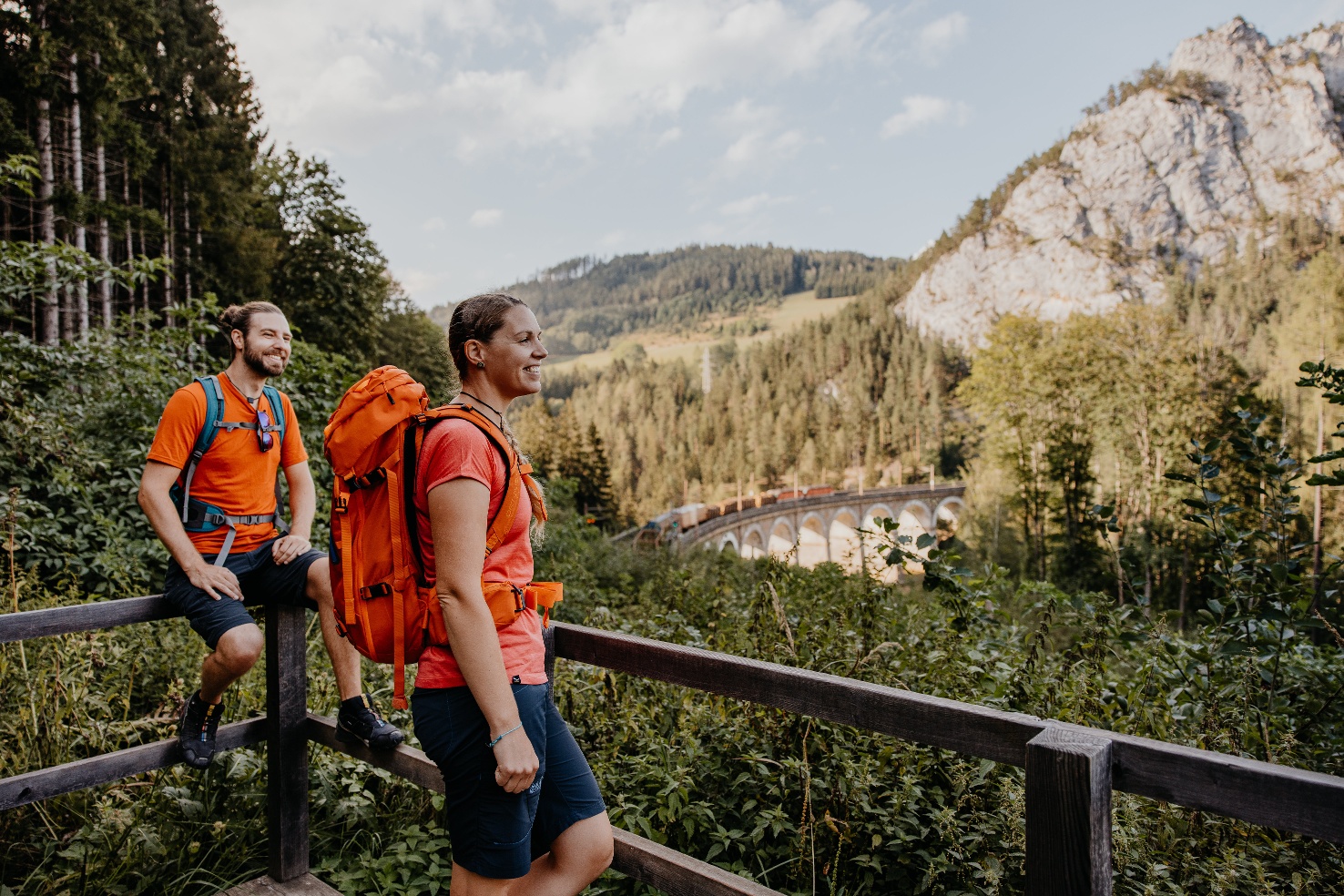
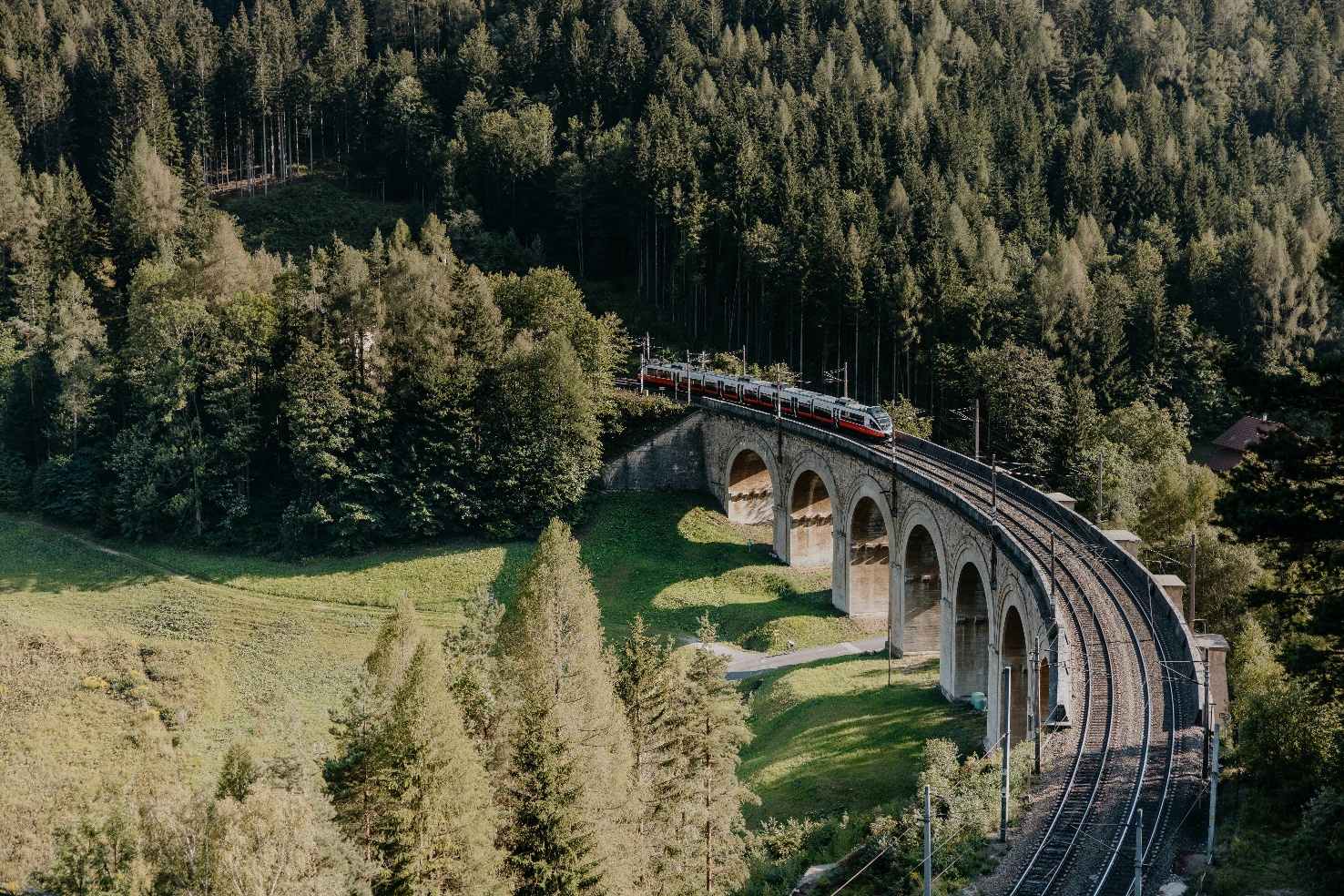
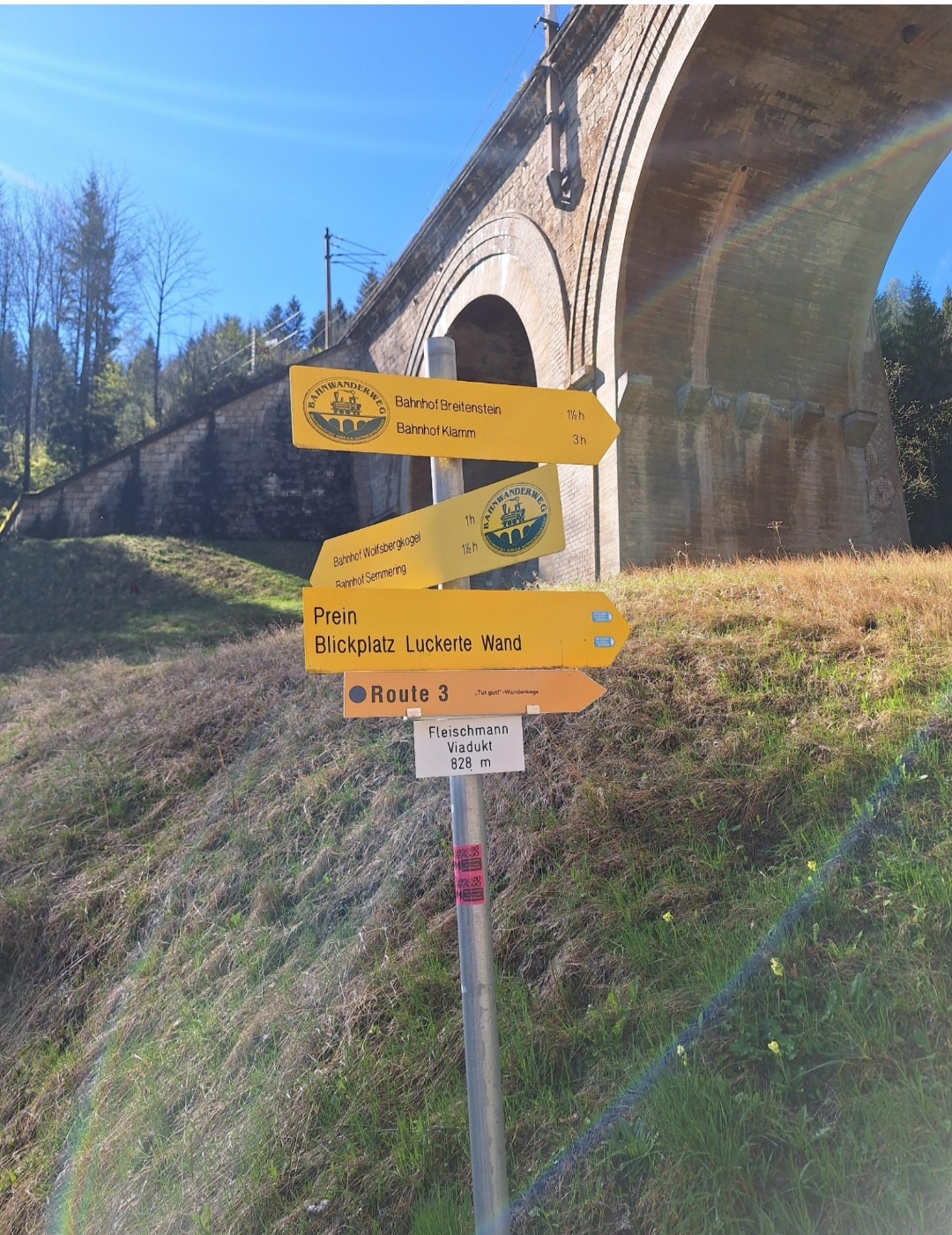
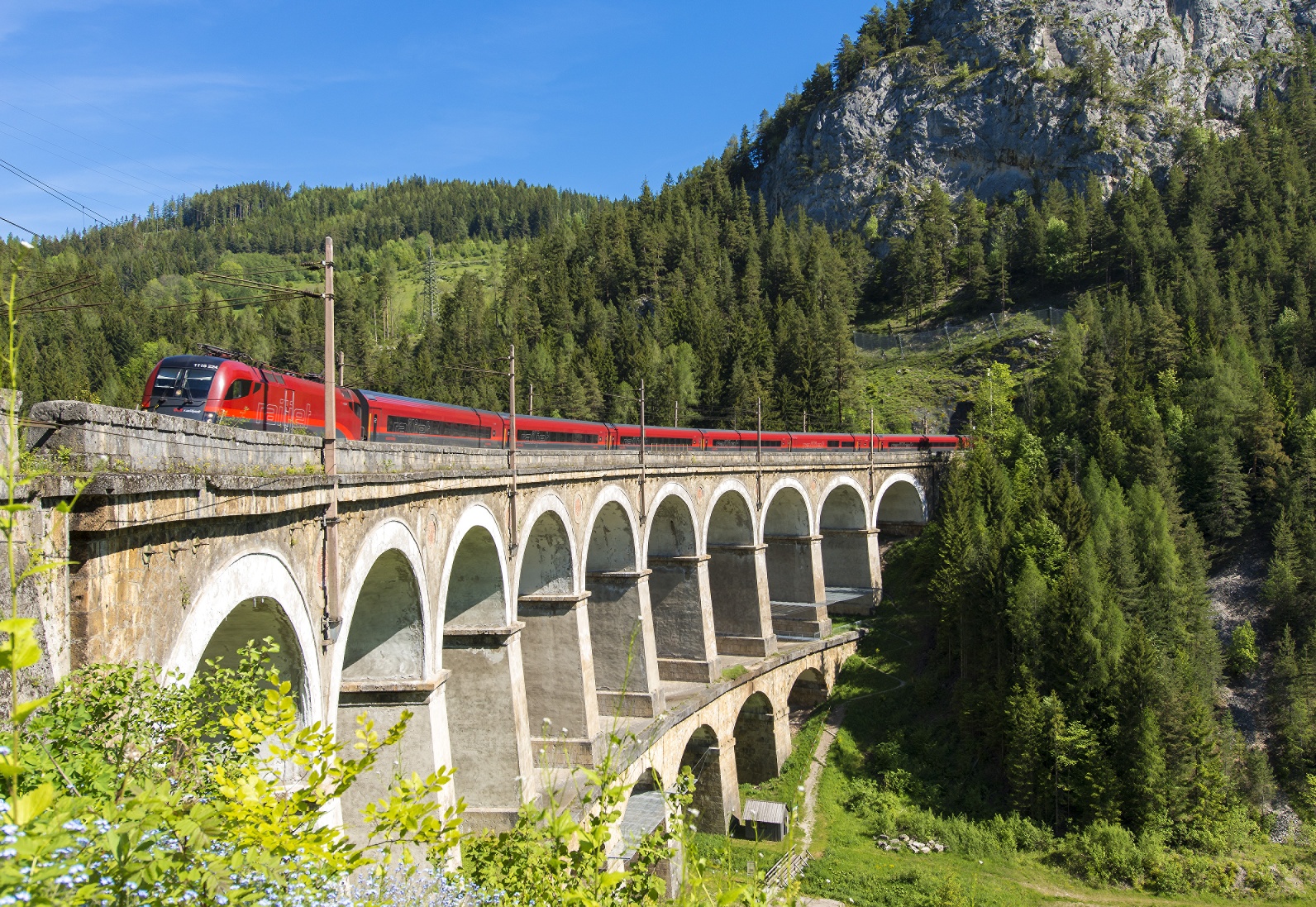
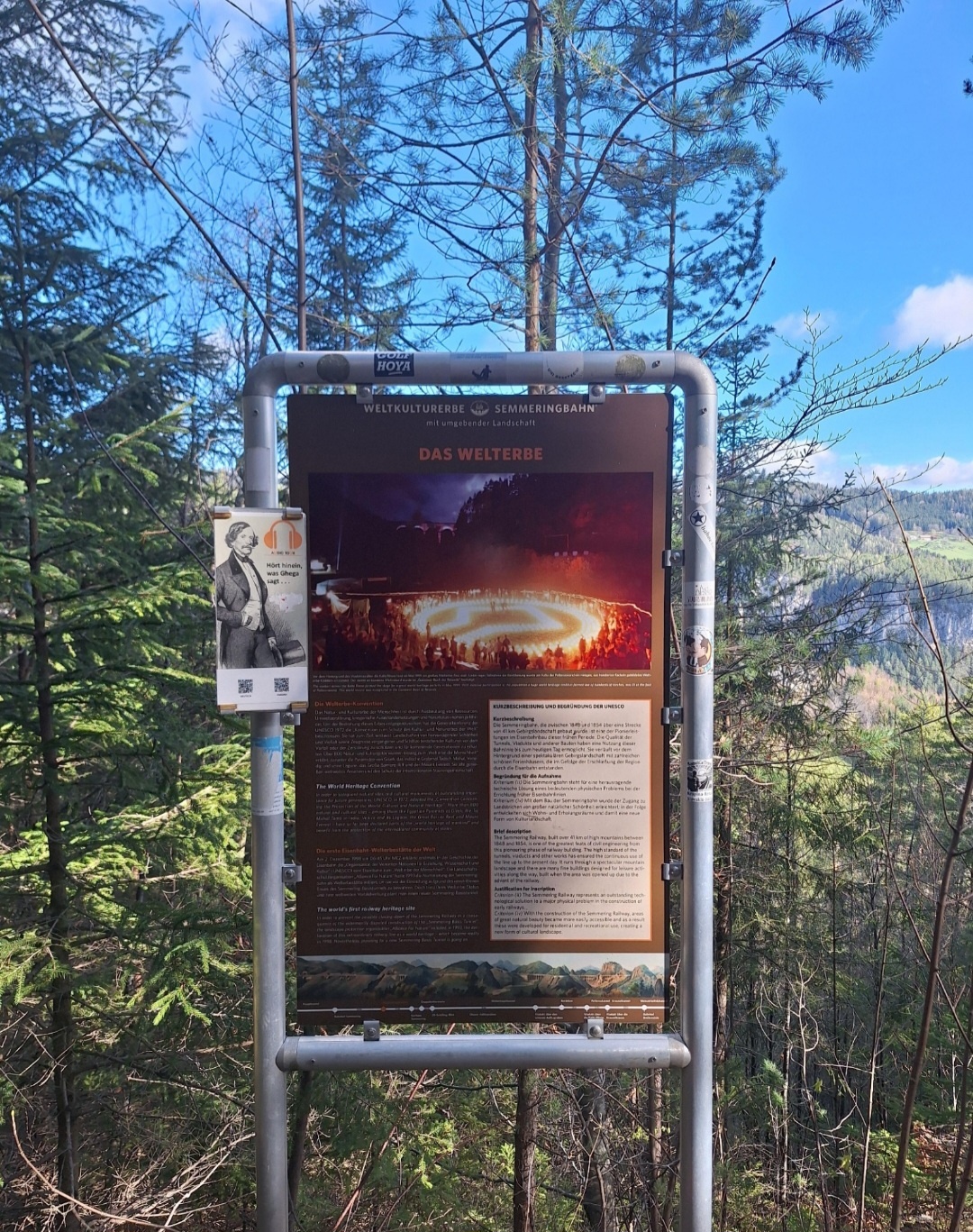
The hike begins at Semmering Station and follows the Semmering Railway, a UNESCO World Heritage Site. Information panels and beautiful viewpoints line the entire route. From Semmering Station, the trail leads past the historic Südbahn Hotel to Wolfsbergkogel. At the Doppelreiter observation point, you’ll enjoy a panoramic view of the imposing viaducts and tunnels, with the Rax and Schneeberg mountains in the background. From here, you can watch trains as they travel over the Ghega Railway’s most impressive structure, the “Kalte Rinne.” Be sure to enjoy the “20-Schilling View” (named after the design on the 20-schilling bill). The route continues to the Fleischmann Bridge, along the “Roter Berg” via the Bahnstrasse; from the “Kalte Rinne,” the trail follows the upper Adlitzgrabenstrasse, past the Iron Cross, to Breitenstein. You can easily return to the starting point or continue on to Payerbach and Gloggnitz by taking the Semmering Railway or following the hiking trails along the railroad.
History
In the beginning, it was a trail that led over the Semmering Pass—there is evidence of this dating back to the Middle Ages. Then, in the early 18th century, Emperor Charles VI had a road built with a gradient of up to 17 percent, over which horses laboriously struggled with their loads. Finally, in 1841, the contract was awarded to build a railway line from Vienna to Trieste to meet the transportation needs of the nascent industrial revolution. By 1844, the task was “merely” to close the gap between Gloggnitz and Mürzzuschlag over the Semmering. Under the direction of Carl Ritter von Ghega, 20,000 workers eventually built Europe’s first standard-gauge mountain railway, which has undergone only a few changes to this day. Along the 41-kilometer route, trains travel over 16 viaducts, 100 bridges, and through 15 tunnels. Since 1998, this “outstanding technical solution to a major physical problem in the construction of early railways” has been an UNESCO World Heritage Site.
Your hikes in the Vienna Alps should be a thoroughly beautiful and safe experience.
Please note the following:
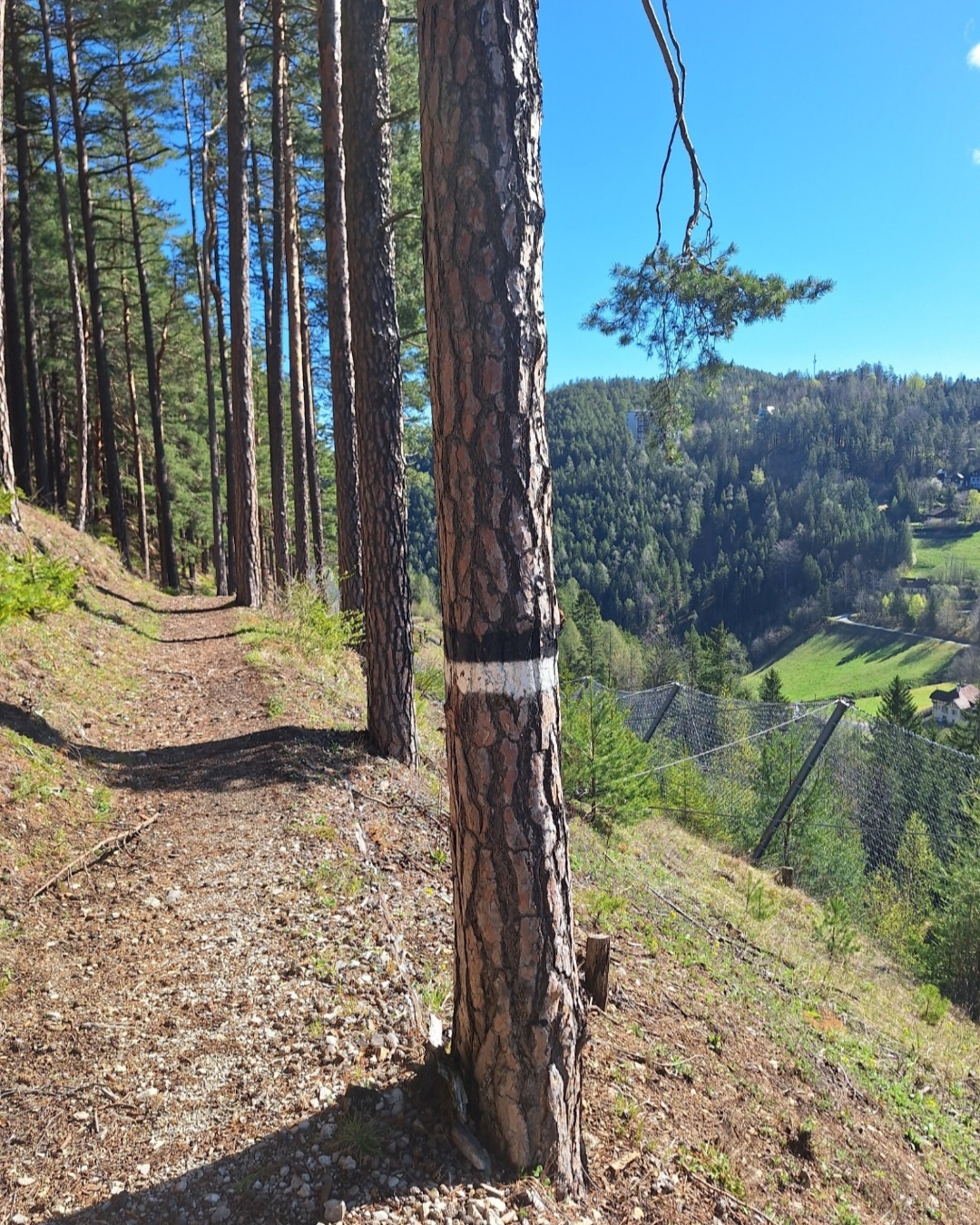
Make sure that the route you choose matches your mountain experience and fitness level. Check the weather forecast beforehand. Weather in the mountains can change suddenly. Always set out equipped accordingly (appropriate footwear, rain protection). Check whether the huts and snack stations you want to visit are open. Inform someone about your chosen route and planned return before you set out. Stay on marked paths and avoid shortcuts. Due to dryness, meadows and forests are easily flammable. Treat fire respectfully and report any possible fire to the fire department immediately. Do not litter and dispose of your rubbish properly.
Always take suitable maps with you. Wear sturdy shoes appropriate for the route, bring sun and rain protection as well as water and a snack. Take your mobile phone and save the mountain rescue emergency number: 140
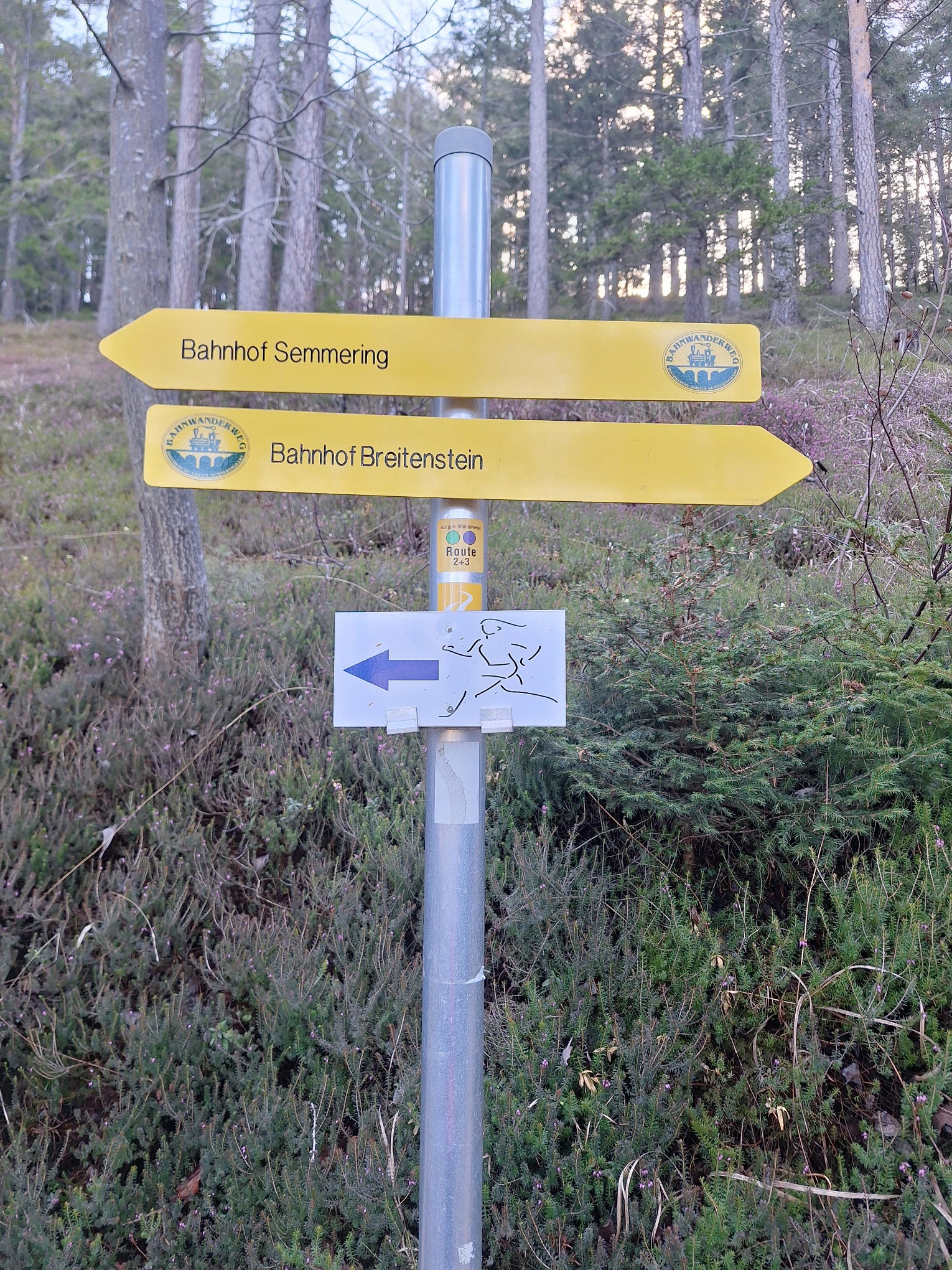
The hike starts at Semmering train station (895 m). From there, follow the course of the railway line, passing the so-called "children's station" (playground) on the way to the Wolfsbergkogel train station (after about 1.5 km). The yellow signposts with the railway hiking trail logo continuously mark the way towards Breitenstein.
Shortly before reaching Wolfsbergkogel station, there is an opportunity to admire the impressive Kartnerkogel viaduct. The railway hiking trail then continues past the spa house. After a short ascent, you reach the Doppelreiter viewing platform at 919 m above sea level.
The next station is the well-known "20-Schilling View," a panorama that once adorned the 20-Schilling banknote. The path then runs through the forest, past several viewpoints and the Villa Daheim. A short section must be covered on the road before reaching the Fleischmann Bridge. There is a photo point and you can view the tools and work camp from the time of railway construction.
The path now leads steeply uphill over the Red Mountain to the impressive Kalte-Rinne Viaduct. The Ghega Museum is also located there. From here, turn right onto Kalte-Rinne street and continue past the Krausel-Klause Viaduct into the village of Breitenstein, passing the Blunzenwirt. At the bridge, the forest path on the left leads up to Breitenstein train station.
You can now continue the hike along the railway hiking trail by the tracks or via the panoramic route to Klamm and then on to Gloggnitz or Payerbach.
Free parking is available at the Semmering train station.
From Vienna take the A2 South Motorway to the S6 Semmering expressway and take the Maria Schutz exit. Turn right onto L4168. Continue on Semmering/L4168 and Semmeringstraße. Turn right onto Bahnhofstraße.
From Graz take the S6 Semmering expressway and take the Spital/Semmering exit. Turn left onto Semmering Ersatz Str./B306. Continue on B306. At the roundabout, go straight to Semmering. Continue on Passstraße, which bends slightly right and becomes Semmering. Turn left onto Bahnhofstraße.
Travel comfortably with the Southern Railway to Semmering train station, where the hike also begins.
Alternatively, you can book an individual trip with the RUFbus Semmering-Rax.
The following RUFbus stops are along the way:
109 Semmering train station
108 Wolfsbergkogel train station
106 20 Schilling View hiking entry
103 Villa Waldheimat
102 Semmering golf course
100 Kalte Rinne/Ghega Museum
101 Blunzenwirt
96 Breitenstein municipal office
95 Breitenstein train station
Return trip:
TIP: Book the RUFbus easily and individually using the Postbus shuttle app or hotline +43 660 9008822.
More information and timetables can be found at fahrplan.oebb.at and anachb.vor.at
Leider können wir Ihnen zum jetzigen Zeitpunkt keine Wetterdaten für den Ort anzeigen.
Places to eat:
Meierei at Semmering Golf Course
Hinterholz 9 tavern, tel. 0664/1057229
More info:
Vienna Alps in Lower Austria, www.wieneralpen.at, +43 / 2622 / 78960
Tourism office Semmering, www.semmering.at, +43 / 2664 / 20025
Letzte Änderung: 31 Aug 2026